
The golf shop resource library
Merchandise planning for private golf clubs
A private-club shop serves a recurring membership as well as guests. Its assortment needs to feel like the club, stay fresh across repeat visits, and support events without allowing one tournament order to dictate the whole season’s buy.
The starting pointSeparate everyday member demand from event commitments, then connect club identity, brand roles, and delivery timing to the seasonal plan.
MERCHED builds this plan from your shop’s own sales history. See the merchandise planning software
01
Understand the members who actually shop
Start with observed purchasing patterns rather than a single description of the membership. Consider women’s and men’s programs, frequent players, seasonal residents, guests, and members shopping for gifts. A small but active group may support a focused assortment even when its share of total membership is modest.
Combine sales evidence with staff observations. Record requests for missing sizes, preferred fits, price sensitivity, and products members buy away from the club. Treat requests as context to investigate; one vocal preference is not automatically a reliable forecast for the whole membership.
02
Keep event programs distinct from everyday retail
Build a calendar of member-guest tournaments, invitationals, opening events, and holiday gifting. Identify which purchases are funded by an event budget and which depend on members choosing to buy from the shop. Check whether logo approvals and embroidery lead times require an earlier commitment than ordinary merchandise.
Record event quantities separately when reviewing history. Merchandise issued to participants has a different demand pattern from units sold from a display. Use confirmed participation and the event brief for a tournament package; use shop sales and member context for the retail assortment.
03
Express the club’s identity without duplicating the assortment
Set standards for logo use, color direction, price architecture, and presentation. Member-favorite brands can anchor the assortment, while a limited new line adds interest. Give each brand a role so the assortment remains coherent rather than becoming several versions of the same product.
Plan freshness through the delivery calendar as well as the product selection. Repeat shoppers may respond to a considered change in color or display, while core sizes still need depth. Balance exclusivity with practicality: a special logo product needs enough demand to justify minimums and a clear plan for remaining units.
04
Agree on priorities and ownership before the buy
Bring the merchandiser, PGA professional, and relevant club decision-makers into a concise review. Clarify which commitments support member service, which are expected to generate retail sales, and which belong to event budgets. Document exceptions so next season’s buyer understands why the plan differed from the historical mix.
- Confirm event quantities, funding, logo approvals, and delivery deadlines.
- Protect useful size coverage in the member-favorite categories.
- Reserve intentional space and budget for gifting or new assortments.
- Identify who approves changes and who confirms orders with vendors.
Turn the approved direction into a vendor-ready buying brief.
From process to practice
Where MERCHED fits
MERCHED is merchandise planning software built specifically for golf shops, including private-club operations. Club profile inputs, planning preferences, uploaded history, budgets, and brand controls inform the recommendation. The merchandiser brings the member and event context, reviews the data-backed starting point, and retains control of the final plan; the software does not independently know future event participation or place tournament orders.
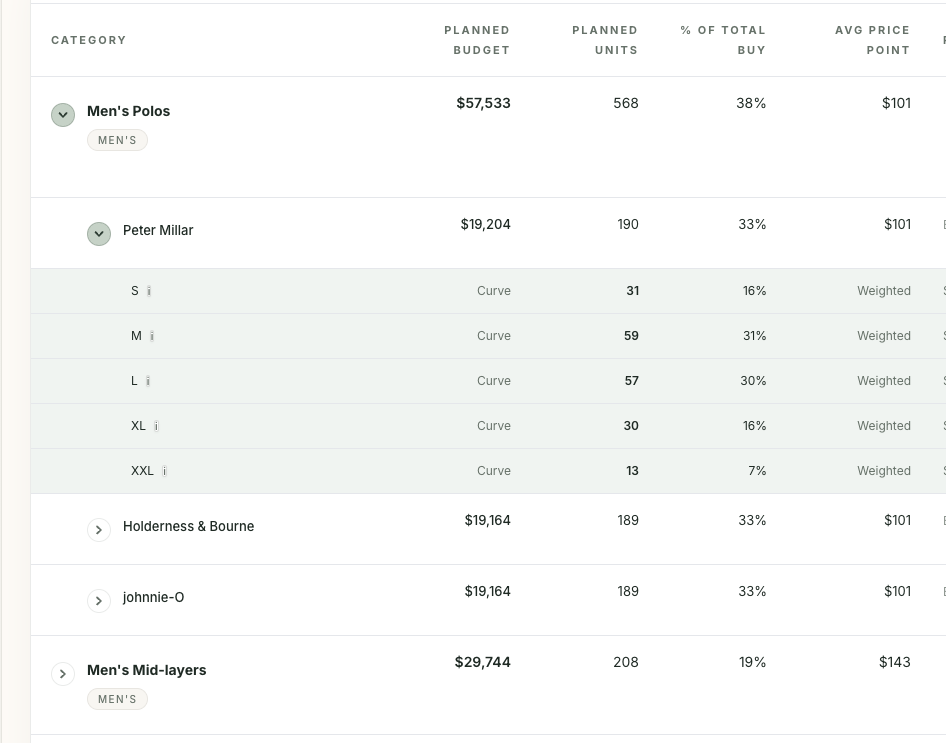
Explore our merchandise planning software, see How It Works, or read Built for Golf for the shop-specific inputs behind the recommendation.
Questions from the shop
Frequently asked questions
Should tournament gifts be included in normal shop demand?
Track them distinctly. Event packages can be planned alongside the shop buy, but participation-driven quantities should not silently become the baseline for ordinary retail demand. Identify the funding and intended use of each commitment.
How can a small private-club shop introduce a new brand?
Define a limited category role, budget, and selling window, then decide which existing allocation funds it. Review the result alongside presentation, size availability, and member response before expanding the brand.
How should member requests affect the plan?
Record recurring requests and compare them with sales and availability. A pattern of missing sizes or fits may justify a test. Keep the scope and review date clear so the test can inform the next buying decision.
Bring more structure to your next buy.
Build on your shop’s history with every season you plan. Give MERCHED more context, review the recommendation, and make the final plan your own.
Get Started