
The golf shop resource library
How to build a golf merchandise plan
A merchandise plan connects what your golf shop expects to sell with the assortment you intend to offer. It gives the buyer a direction for the season before individual styles, colors, and vendor appointments take over the conversation.
The starting pointStart with the selling season, decide the role of each category, and reconcile the assortment before committing to the buy.
MERCHED builds this plan from your shop’s own sales history. See the merchandise planning software
01
Define the selling season before the assortment
Set a planning window that matches when golfers actually shop. A northern club’s spring opening, summer member-guest, and fall closing create different needs from a resort that welcomes winter visitors. Record the first meaningful selling date and the last useful delivery date for each seasonal group.
Use comparable sales periods, then annotate changes: a course renovation, more outing rounds, a changed tournament calendar, or an expanded women’s program. Separate recurring shop demand from event packages and special orders so a one-time purchase does not become next year’s everyday assortment.
02
Give each category a job
Polos may anchor the shop’s apparel business, while mid-layers extend the selling season and headwear offers an accessible logo purchase. Hardgoods, gifting, and women’s apparel have their own demand patterns. Set category priorities using both evidence and the experience you want the shop to deliver.
Distinguish breadth from depth. Breadth is the range of styles or options; depth is the quantity behind each option. Adding another polo color without enough units in the sizes members buy can make a wall look full while leaving the assortment difficult to shop.
03
Connect category choices to dollars and deliveries
Label every budget as cost or retail value and use that basis consistently. Category allocations should add back to the total plan. Brand commitments sit inside those category totals; they are not extra spending layered on afterward.
A sales goal describes what you hope to sell; a purchase budget sets what you can commit to new merchandise. Before allocating that budget, account for usable stock already owned and orders due in the selling window. Confirm whether logo charges and freight sit inside the limit, so the assortment does not spend money already reserved for those costs.
Plan receipts around selling opportunities. An opening delivery can establish the assortment, while later deliveries introduce seasonal colors or cooler-weather layers. Confirm vendor availability and logo lead times before relying on a delivery window. Keep an intentional portion of the available buy uncommitted if the shop needs flexibility.
Use open-to-buy planning to check what remains available to commit.
04
Follow one category from history to a proposed buy
Keep three decisions distinct: what sold, what you expect to sell next, and what still needs to be purchased. A sales forecast is not an order quantity. Existing stock, outstanding orders, and the stock you want at the end of the season connect the two.
The teaching example below uses fictional figures for one polo category, with no transfers, returns, or other stock movements. It shows the sequence of decisions, not a customer result or MERCHED’s recommendation formula.
- Evidence: 300 polos sold through ordinary shop retail in the comparable prior season; event gifts are tracked separately.
- Buyer assumption: plan for 330 sales next season, a 10% increase that still needs a documented reason.
- Stock target: finish with 30 polos. Beginning usable stock is 60 units, and 40 units are already on order for the season.
- New purchase need: 330 planned sales + 30 ending units − 60 beginning units − 40 on-order units = 260 additional units.
Turn the approved category allocation into vendor and size-run decisions.
05
Review the whole shop before approving the plan
A plan should explain tradeoffs, not just produce totals. Ask whether a strong category deserves deeper size coverage, whether two brands serve the same purpose, and whether the planned assortment fits the fixtures and stockroom. Document the reason for deliberate departures from history.
- Reconcile category and brand totals on the same cost or retail basis.
- Check that core sizes have useful depth and new categories have a clear purpose.
- Separate event commitments from everyday shop demand.
- Record the evidence, changed assumption, proposed commitment, and reason for each material adjustment.
- Confirm delivery timing, logo requirements, and who approves the final buy.
From process to practice
Where MERCHED fits
MERCHED is merchandise planning software built specifically for golf shops. It combines uploaded sales and order history with shop context, season inputs, budgets, category priorities, and brand controls to create a reviewable recommendation. The category and brand structure provides a data-backed starting point; the merchandiser reviews assumptions, adjusts the plan, and controls the final buy.
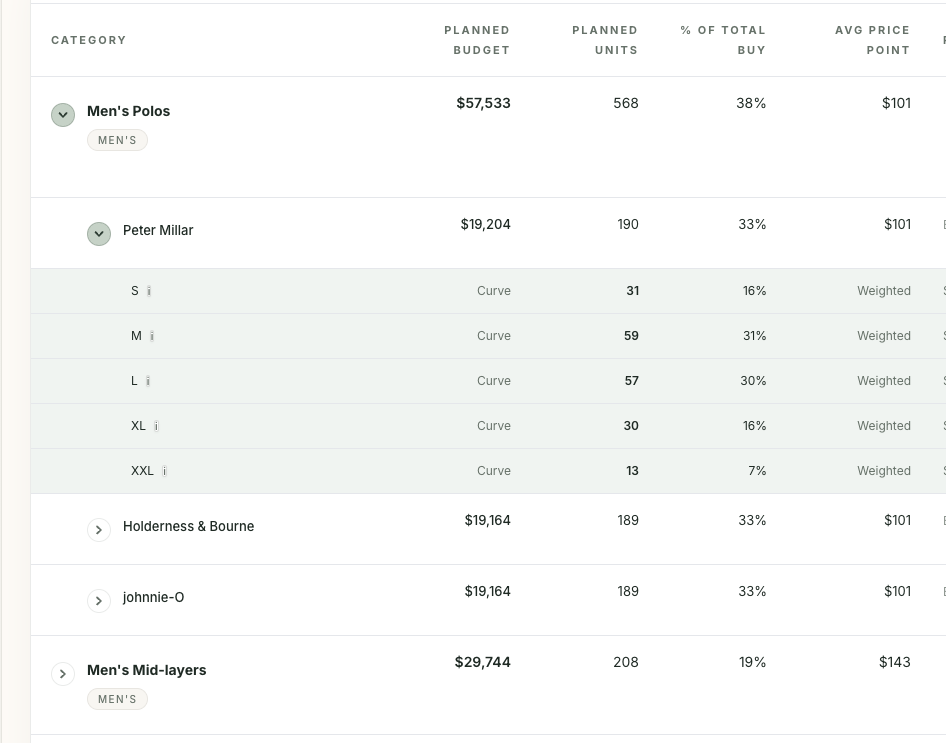
Explore our merchandise planning software, see How It Works, or read Built for Golf for the shop-specific inputs behind the recommendation.
Questions from the shop
Frequently asked questions
What is the difference between a merchandise plan and a purchase order?
A merchandise plan sets the direction, allocation, and timing of the assortment. A purchase order commits to specific merchandise with a vendor. Finish the planning review before turning that direction into orders, and confirm the vendor’s actual terms and availability.
Should I repeat last season’s category percentages?
Use them as a baseline, then consider stockouts, markdown activity, event sales, and changes in the shop. A category’s past sales share can reflect the stock it was given, rather than all the demand it could have served.
When should a golf shop revisit its seasonal plan?
Review it before major vendor commitments and delivery windows, and when the selling outlook changes. Compare new evidence with the original assumptions so adjustments have a clear reason rather than becoming disconnected purchases.
Bring more structure to your next buy.
Build on your shop’s history with every season you plan. Give MERCHED more context, review the recommendation, and make the final plan your own.
Get Started